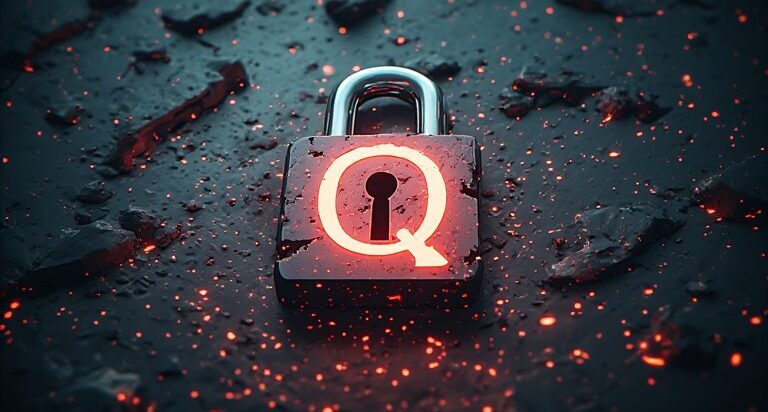
In the fast-paced world of financial technology, we are accustomed to disruption. From the rise of decentralized finance to the integration of artificial intelligence in algorithmic trading, the landscape is in a constant state of evolution. However, a new paradigm shift is approaching, one that threatens the very foundation of digital trust. This shift is driven by quantum computing, and the looming milestone is known as “Q-Day.”
Q-Day represents the hypothetical moment when a quantum computer becomes powerful enough to break the cryptographic algorithms that currently secure our digital world. For years, this was treated as a distant, theoretical risk, a Y2K-style ghost story for cryptographers. But recent developments in 2026 have dramatically accelerated the timeline, turning a future possibility into a present reality that the financial sector can no longer ignore.
Video: How Far Away Are We From Q-Day?
The Accelerating Timeline to Q-Day: Where Do We Stand?
The consensus on when Q-Day might arrive has shifted significantly. In early 2026, three groundbreaking research papers were published within a span of three months, collectively rewriting the quantum threat timeline.
The most alarming of these came from Google Quantum AI in March 2026. The whitepaper demonstrated that the elliptic curve cryptography (ECC) protecting virtually every major cryptocurrency and digital signature could be broken with fewer than 500,000 physical qubits in a matter of minutes. This represents a staggering 20-fold reduction from previous estimates, which required roughly 9 million physical qubits.
The implications are profound. What once required 20 million qubits to break RSA-2048 encryption now requires fewer than one million, and potentially fewer than 100,000 under newer architectures like Iceberg Quantum’s Pinnacle. This rapid algorithmic innovation has prompted major tech players to revise their internal deadlines. Both Google and Cloudflare have recently accelerated their target for full post-quantum cryptography (PQC) readiness to 2029.
“The quantum resources needed to break modern encryption have dropped by an order of magnitude since May 2025.” The Quantum Insider
For a deeper dive into how quantum computing threatens today’s cryptography, consider this insightful breakdown from IBM Technology:
(https://mediacenter.ibm.com/media/Are+You+Ready+Q-Day/1_4wpww5hw)
Video: Q‑Day Explained: How Quantum Computing Threatens Today’s Cryptography
The “Harvest Now, Decrypt Later” Threat
One might argue that since a Cryptographically Relevant Quantum Computer (CRQC) does not yet exist, the threat is not immediate. This is a dangerous misconception, particularly for financial institutions. The primary risk today is the “Harvest Now, Decrypt Later” (HNDL) strategy.
Adversaries ranging from state-sponsored actors to sophisticated cybercriminal syndicates are actively intercepting and storing encrypted data today. Their bet is simple: while they cannot read the data now, they will decrypt it once quantum computers mature. For the financial sector, where data such as trade secrets, personal identifiable information (PII), and long-term strategic plans must remain confidential for decades, this temporal dimension means the threat is already active.
Google recently issued a stark warning confirming that adversaries are already harvesting encrypted data ahead of quantum computing breakthroughs. Despite this, research indicates that only 9 percent of organizations currently have a plan for transitioning to quantum-resistant encryption.
The G7 central banks have also recognized this urgency. In May 2026, the G7 Quantum Technologies Working Group published its first report, placing post-quantum cryptographic migration at the center of financial-sector quantum resilience. The report explicitly highlights the HNDL threat, noting that the exposure is real regardless of the exact year a CRQC arrives.
To understand the broader implications of quantum computing on global level, watch this:
Post-Quantum Cryptography (PQC): The Race Against Q-Day
The Authentication Crisis: Trust Now, Forge Later
While the encryption threat (HNDL) garners the most attention, the G7 report also highlights a potentially more disruptive risk for financial infrastructure: the threat to digital signatures.
If the signature schemes currently in use become vulnerable, it could enable the forgery of signatures or the impersonation of trusted entities. This is known as the “Trust Now, Forge Later” (TNFL) problem. In a sector heavily reliant on tokenized assets, digital identity frameworks, and distributed ledger systems, the compromise of cryptographic authentication could undermine the very fabric of non-repudiation and identity verification.
The cryptocurrency ecosystem is particularly vulnerable. The Google whitepaper suggests a roughly 41% probability that a primed quantum computer could derive a private key before a Bitcoin transaction is confirmed. This has led to urgent calls within the crypto community to accelerate work on quantum-resistant upgrades.
For a technical discussion on post-quantum signature schemes and their impact on digital assets, this panel from Bitcoin 2026 provides excellent context:
Video: An Explanation of Post-Quantum Signature Schemes | Bitcoin 2026
Navigating the Transition to Post-Quantum Cryptography
The solution to the quantum threat lies in Post-Quantum Cryptography (PQC). New cryptographic algorithms designed to be secure against both quantum and classical computers.
The National Institute of Standards and Technology (NIST) has been leading the charge, finalizing its first three PQC standards in August 2024: ML-KEM for key establishment, and ML-DSA and SLH-DSA for digital signatures. NIST’s deprecation timeline calls for quantum-vulnerable algorithms to be deprecated after 2030 and disallowed after 2035.
However, transitioning the global financial infrastructure to PQC is a great undertaking. It requires a comprehensive cryptographic inventory, identifying every system using vulnerable algorithms like RSA and ECC. Organizations must prioritize long-lived assets and begin embedding quantum-safe requirements into their architecture standards today.
| Cryptographic Standard | Status | Primary Use Case | Quantum Vulnerability |
| RSA-2048 | Legacy | Encryption / Signatures | Highly Vulnerable (Shor’s Algorithm) |
| ECC (P-256) | Legacy | Digital Signatures | Highly Vulnerable (Shor’s Algorithm) |
| ML-KEM (Kyber) | Finalized (NIST 2024) | Key Encapsulation | Quantum-Resistant (Lattice-based) |
| ML-DSA (Dilithium) | Finalized (NIST 2024) | Digital Signatures | Quantum-Resistant (Lattice-based) |
| SLH-DSA (SPHINCS+) | Finalized (NIST 2024) | Digital Signatures | Quantum-Resistant (Hash-based) |
Table 1: Overview of Cryptographic Standards and Quantum Vulnerability
As Ali El Kaafarani, CEO of PQShield, aptly stated: “Quantum computing is in the digital world, equivalent to developing a nuclear bomb… The consequences would be felt acutely in banking given the vast quantities of personal and financial data protected by what is currently believed to be safe encryption“.
For insights into the hardware and protocols driving this transition, the recent RWPQC 2026 session is highly recommended:
Video: Post-Quantum Cryptography & The Quantum Era: Hardware, Risks, and Protocols | RWPQC 2026, Session 1
The Human Element in a Quantum World
Beyond the algorithms and the hardware, the transition to a quantum-safe financial ecosystem is fundamentally a human challenge. It requires foresight, collaboration, and a willingness to invest in security infrastructure before the crisis hits.
For fintech leaders, the mandate is clear: we cannot afford to wait for Q-Day to arrive. The window for an orderly migration is open, but it is closing faster than we anticipated. The decisions we make today will determine the resilience of our global and local financial systems tomorrow.
As we stand on the precipice of the quantum era, we must ask ourselves: Are we building our financial future on a foundation of sand, or are we ready to forge the quantum-safe bedrock required to protect the next generation of digital trust? The answer will be known: soon.
References
[1] Palo Alto Networks. (n.d.). What Is Q-Day, and How Far Away Is It—Really?
[3] Google Blog. (2026, March 25 ). Google’s timeline for PQC migration.
[4] Cloudflare Blog. (2026, April 7 ). Cloudflare targets 2029 for full post-quantum security.
[9] The Quantum Insider. (2026, April 6 ). How Quantum Computing Affects Cryptography.
[10] Immersive Labs. (2026, April 14 ). World Quantum Day 2026: The 5-Year Sprint to Q-Day.
Video: The Race to Harness Quantum Computing’s Mind-Bending Power | The Future With Hannah Fry
